2009–12
Origins
Homemade quads, chalk lines, the first marks that were meant to be rows and looked, from the gate, like a drawing.
UAV Agri Services Ltd
presents
Precision from above.
UAV Agri Services Ltd · Herefordshire
Rural drone painting for the modern farm. We coat the crop — and the barn — with centimetre accuracy, so every hectare earns its keep.
I/The land
For a century, spraying meant heavy iron and wasted chemistry. We fly instead. A single aircraft, the weight of a sack of seed, covering forty hectares in an hour — no ruts, no run-off, no guesswork.
Rural drone painting is not a gimmick. It is husbandry, rewritten for the air. Every pass, a measured stroke. Higher coverage. Perfect finish. Rural focus.
0ha
covered in an hour
0%
less water than a boom
0cm
pass accuracy
0%
CAA-registered pilots
II/The lineage
Rural drone painting did not arrive as a product. It accumulated — accidents, gatherings, better tanks — until a farm could be coated from the air and still look like itself the next morning. A demonstration is not a contract. A grant is not a job. We keep those records separate.
2009–12
Homemade quads, chalk lines, the first marks that were meant to be rows and looked, from the gate, like a drawing.
2015–17
Barn roofs as canvas. Swarms on silos. Towns spending a weekend coating what they already knew.
2019–23
Metered pigment. Night ops. Chemistry that fades with the season — do not outstay the crop.
2025–
Maps that follow contour. Story routes across a parish. The countryside, still painted — and still farmed.
The parish record of demonstrations, money, channels, prices and case studies — kept as evidence, not as a sales deck.
01
A field day, a trade stand, a live coat on a barn. Valuable timestamps. Not a paid job, not a repeat, not a market — until the ninety days after the applause leave a paper trail.
02
A grant dates intention. Equity dates a company. A customer-funded trial is the stronger signal: someone outside the yard paid to see if the method held.
03
Maker to operator. Operator to coating supplier. Operator to the facilities man who already holds the maintenance contract. A logo on a press release is weak. Recurring orders are not.
04
Per metre, per day, per project, or a plan. Historical prices keep their date, currency and scope. The question is not whether the drone was cheap — it is what burden it replaced.
05
Named holding, dated site, defined coat, independent sign-off, a repeat. Anonymous savings and undated photographs stay folklore. Each claim keeps its own source — and a note of what it does not prove.
2009
Tinkerers in farming country bolted chalk lines and seed-markers to homemade quads. They meant efficiency. The first marks on soil and gravel were accidents.
Origins
2012
Drones began marking crop rows. Imperfect GPS left arcs and spirals. Farmers saw waste. A few looked down and saw a drawing.
Discovery
2015
Towns spent weekends coating roofs from the air. Sketches became flight paths. Rural coating stopped being a metaphor.
Community
2017
Coordinated craft laid gradients and second coats. Cooperatives took the method to silos and the walls that hold a hillside up.
Swarm era
2019
Lightweight spray modules made fine work possible — long barn corridors, wildlife, seasons. The boom we fly now starts here.
The kit
2021
Low-light ships and luminous coats. Parishes gathered at dusk to watch a roof take a coat after the tractors had gone in.
Night ops
2023
Lighter chemistry, designed to fade with the season. Artists and farmers sharing the same brief: do not outstay the crop.
Husbandry
2025
Maps that follow contour. Variable rate. The hill decides the stroke, and the tank only spends where the crop asks.
Adaptive
2027
Sequential coats across a parish — barn, bridge, cliff. A walk, not a spectacle. The narrative is the land you already know.
Ahead
2030
Many ships, one parish. Festivals that treat agriculture as the older art. The countryside, still painted — and still farmed.
Ahead
Each flight is still a brushstroke. The countryside keeps the record. The method is still taught in the yard — book a seat.
III/The work
 01
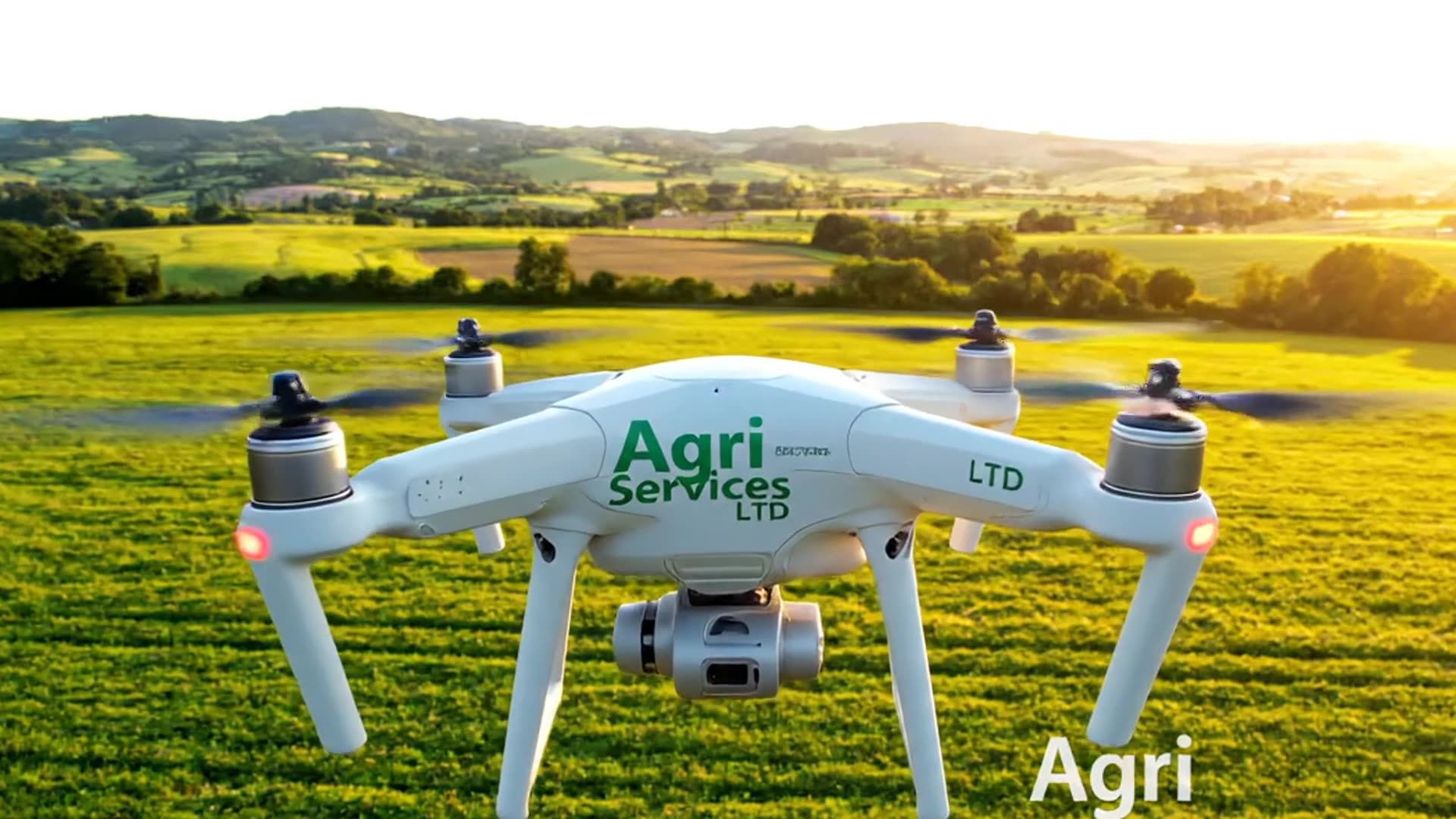
01Fungicide, herbicide and foliar nutrition laid in even, calibrated coats. We fly when the boom cannot: wet ground, tramline-shy crops, the awkward headland.
Request this work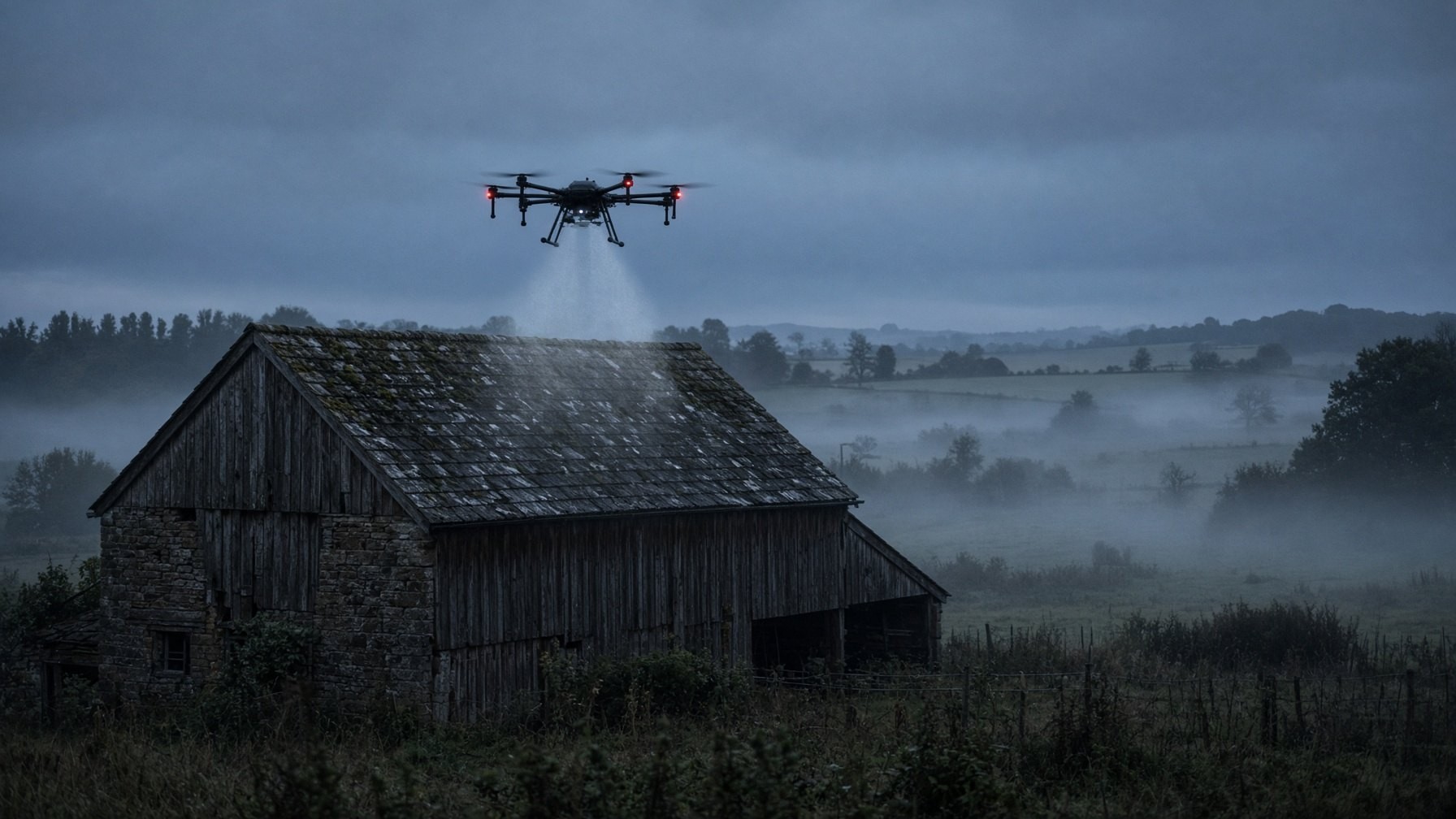 02
02Barns, sheds and rural ironwork finished from the air. Higher coverage, a cleaner edge, and no fortnight of scaffold on the yard.
Request this work 03
03Multispectral eyes before we ever load a tank. We see the stress you cannot from the gate, then paint only where the crop asks.
Request this work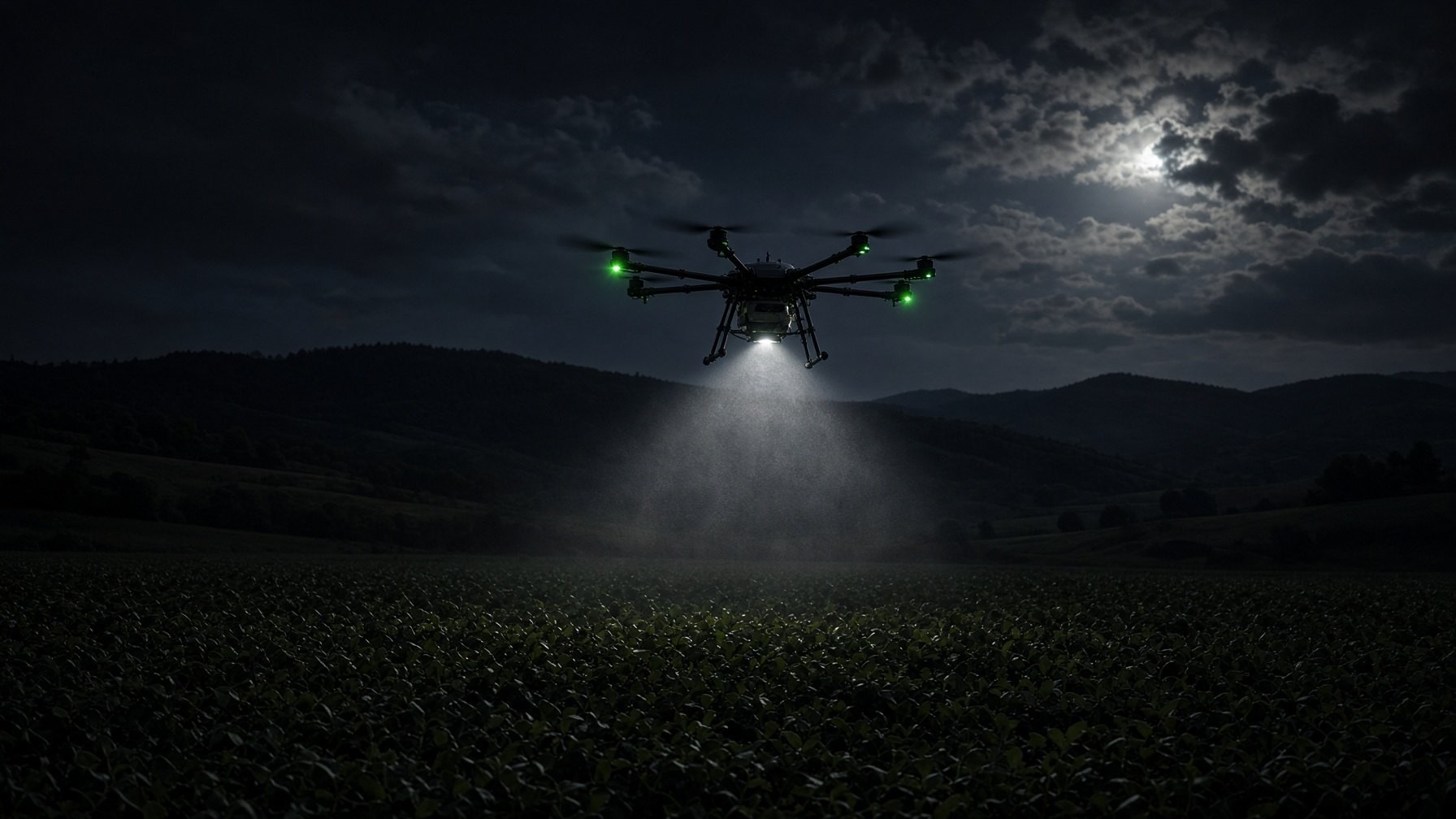 04
04Prescription maps, not blanket rates. Less product. More yield. A quieter footprint on land you mean to keep.
Request this workIV/The academy
Paid days with Ewan on a Herefordshire holding. Mix, fly, debrief. You leave with notes — not a login, not a cart, not a certificate mill.
 01
01A day on the holding
How rural drone painting happened — accidents, barn roofs, metered pigment — and why a pass is still a stroke. The lineage, taught on the ground it came from.
Book this seat02A day in the crop
Mix, boom, weather window, headlands. You fly the work we actually sell: even coats, no ruts, the ground the boom always hated.
Book this seat03A day on the iron
Barns, sheds, rural ironwork from the air. Access, neighbours, a cleaner edge — and no fortnight of scaffold on the yard.
Book this seat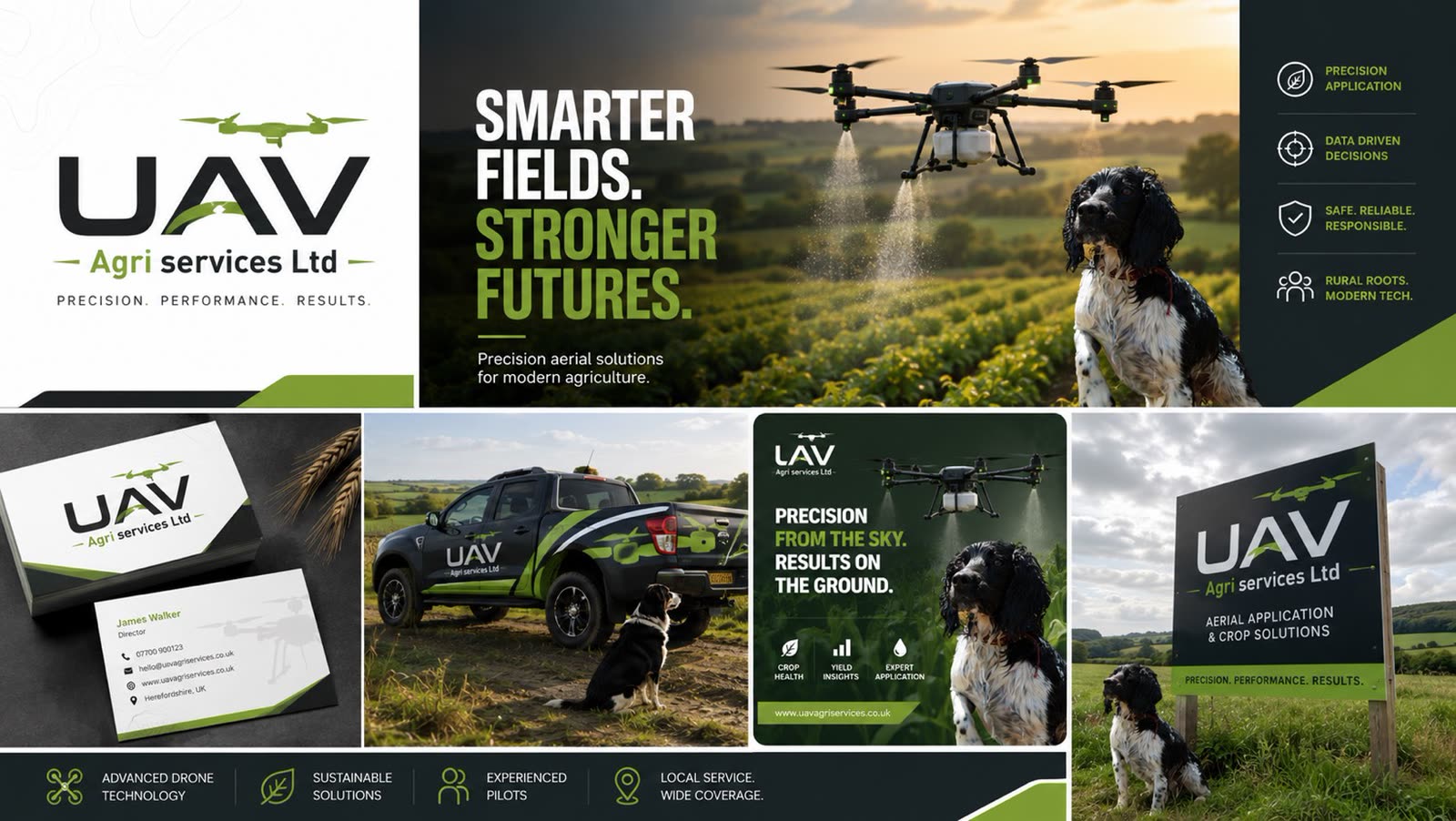 04
04A day with the map
Scout, then spend. Multispectral eyes, variable-rate, what you leave at the gate so next season starts with evidence.
Book this seat01
Hazards, neighbours, the crop, the roof. No flying a field we have not stood in.
02
Tank, boom, product, water. The kit close — hull, nozzles, the name on the nose.
03
Ewan on the sticks, then you. Centimetre work. Neville on the headland.
04
What was applied, where, and why. Paper in the pocket. Not a password.
What a seat actually covers once the rotors are still: line, livestock, clean-down, and the ground you do not fly over.
01
Aircraft, coating feed, hose and supporting line as one system. Mass, snag, drag, clearance, and how you recover it if it fouls.
02
Launch, work face, line source, crossings, livestock, a handler on the line. Sketch it before the rotors turn.
03
Faces, edges, recesses, undersides, returns, no-access. A barn is not a rectangle. Sequence the coat, hold for inspection.
04
Mud, seed, residue and dirty water travel on boots, cases and hose. Clean-down is mobilisation — not an extra at the gate.
05
Where they lie, how they move, when we pause. Neville marks the brown. The rest of the parish still has eyes.
06
Drains, ditches, watercourse, permeable ground. Absorbents staged where a hand can actually reach them — before the first transfer.
07
Send, repeat, confirm. Never “go”, “fine”, or “a bit more”. A radio check is part of walking the holding.
08
Hedges, barns, parked iron, dust and glare hide an approaching tractor. Measured distance is not enough. A dedicated observer is.
We teach the work we fly — spray, coat, scout — on ground we know. We are not a CAA licence mill. Bring a ticket if you have one. Ewan prices the seat to the days and the kit.
Book a seat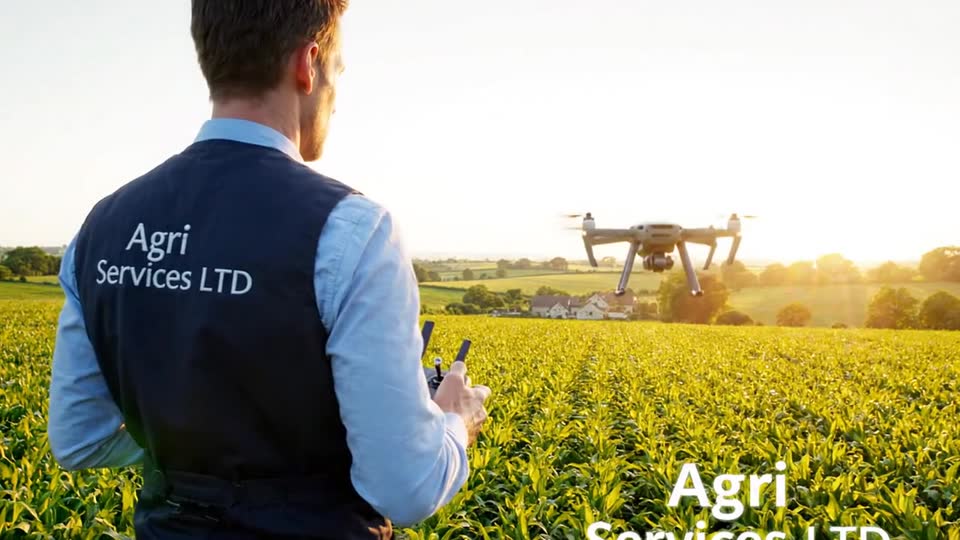
V/The craft
01
A proper look at access, hazards, neighbours and the crop itself. No flying blind.
02
Maps, weather window, water volumes and product. The plan is written before the rotors turn.
03
Centimetre-accurate passes. Even coats. No ruts. We fly the headlands the boom always hated.
04
What was applied, where, and when — so next season starts with evidence, not folklore.
Every nozzle metered. Every pass logged.
Headlands, corners, wet ground — all of it.
Less drift, less water, less of what you do not need.
VI/The kit
The hull
Chrome, carbon, and the name on the nose.
The boom
Metered nozzles. A fine mist, not a flood.
VII/The film
The lift, the aircraft, Ewan, the land, and the mark we leave in the wheat. Sound on, if you like.
01/The lift
Off the grass, over the parish.
The mascot
Neville
VIII/The farm
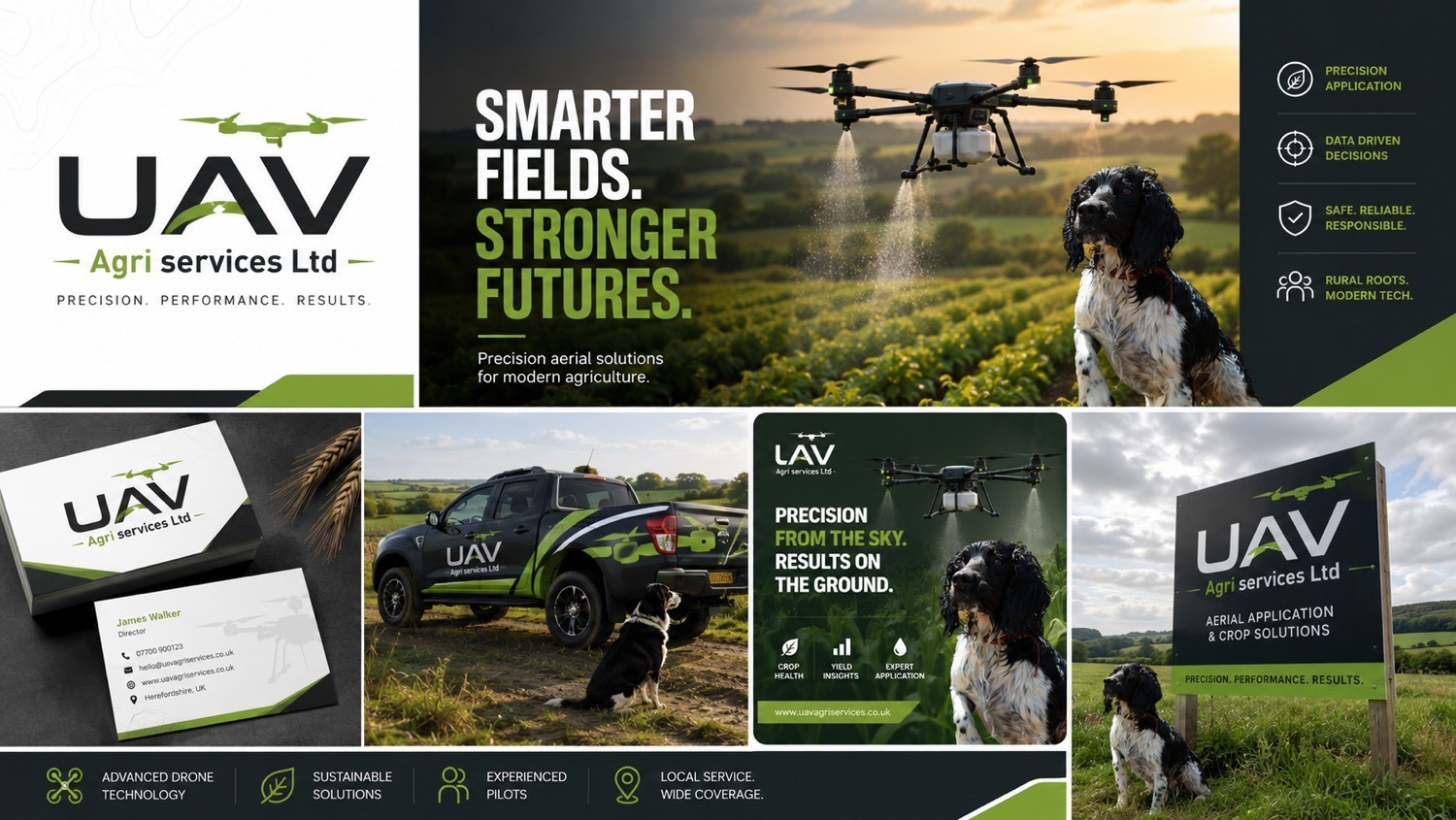
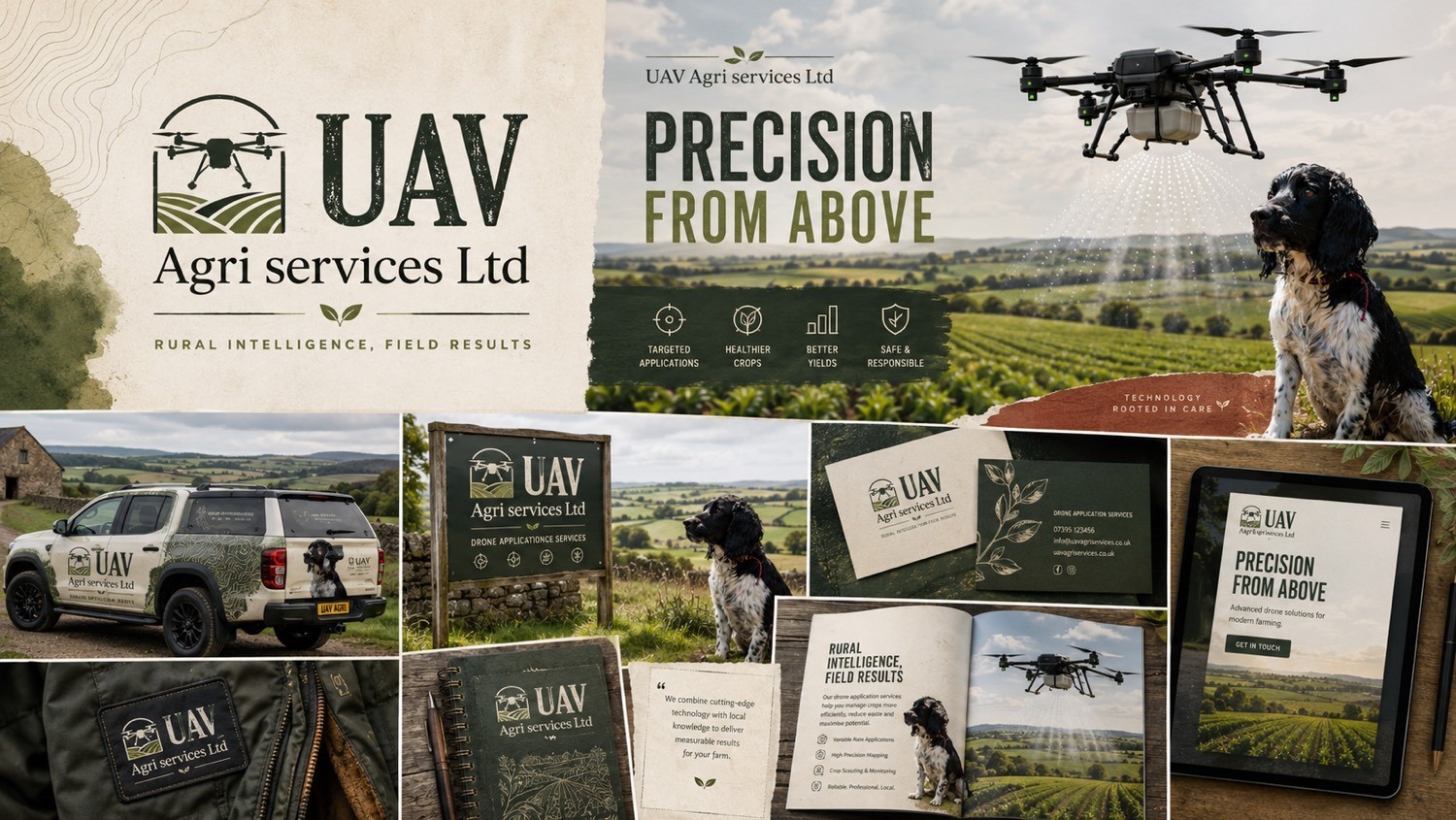
UAV Agri is flown by Ewan. Every holding has a second pair of eyes — Neville, the black-and-white spaniel on the stills. He is the mascot. He is also the reminder that this work is local, muddy, and done for people who still know their fields by name.
Based in Herefordshire. Flying the Marches, the Wye, and the farms that called us last season. Rural intelligence. Field results.
IX/The song
A quiet engine, a parish at first light, a mural the satellite will see and the gate will not. The concept track for the work we fly.
Flight 07
Harvest Lines
42 m · light air · density 78%
Morning hum over sleeping fields, a quiet engine learns the sky.
Painted arcs above the wheat, soft neon whispers drifting by.
Every turn remembers roads, every loop remembers rain.
Rural hearts and metal wings, drawing songs in gentle grain.
From the hill the village sees nothing but a brighter dawn.
Yet in clouds the colors bloom, a hidden mural carried on.
At dawn the ship wakes with the village. It rises over patchwork fields, tracing arcs that echo tractor paths and the river. Each flight is a quiet performance: rotors, first light, a coat laid where the land asked. Not spectacle — listening, then answering.
X/The game
Two sides of the parish. High Score Harvest and Ewan's run — then fly a dawn job below. Neville marks the brown. The boom paints as you pass.
Side A
High Score Harvest
Side B
Ewan's Harvest Run
Pixel coverage for the barn.
A real boom for the field.
You are Ewan. Neville finds the brown. Fly toward him — the boom paints as you pass. Two coats finish a plot. Refill at the truck.
XI/The poster
A century of husbandry, rewritten for the air — and still watched over from the riverbank by Ewan and Neville.
XII/The stills
Studio system
Heritage kit
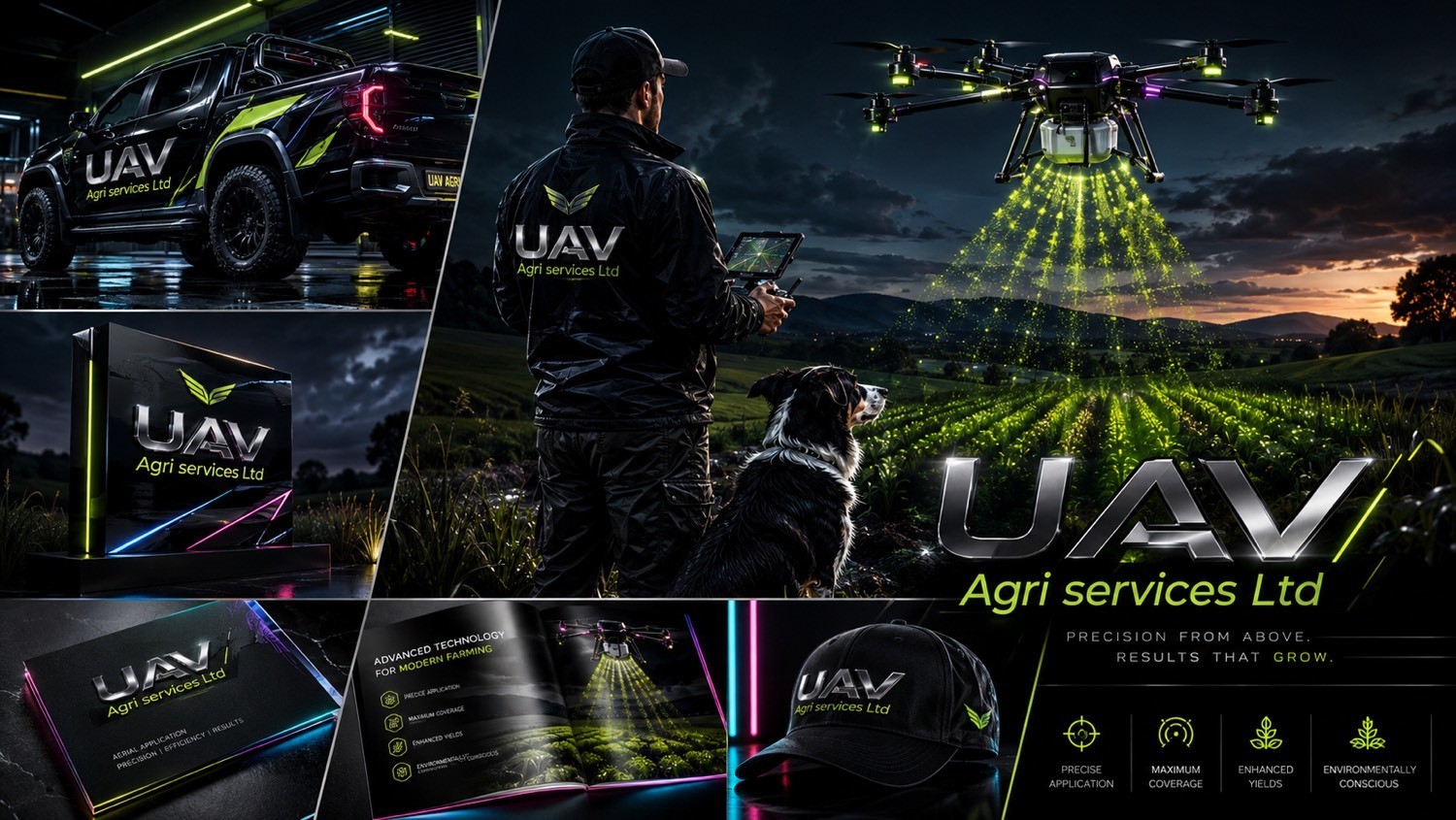
Night spray
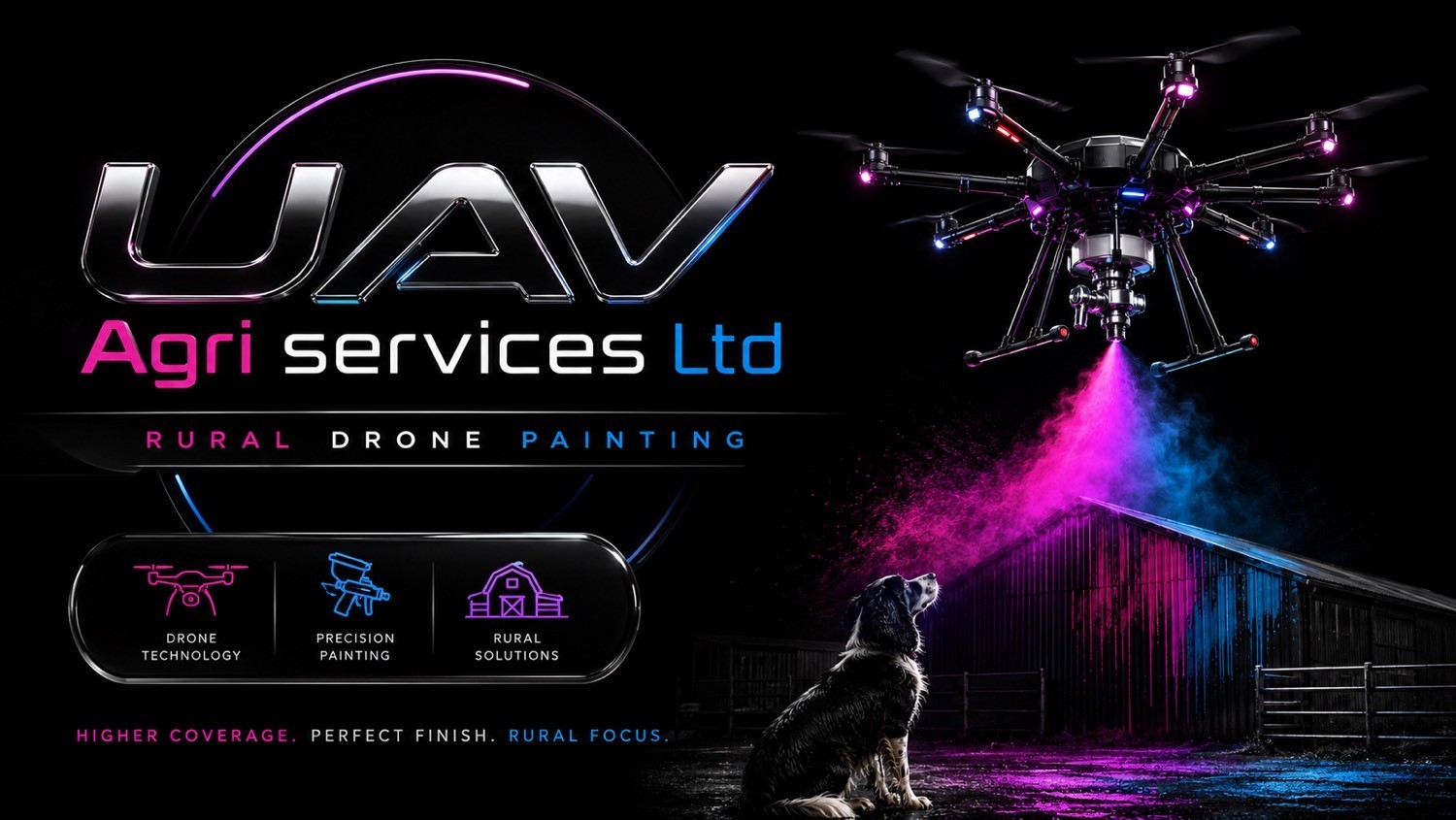
Barn coating
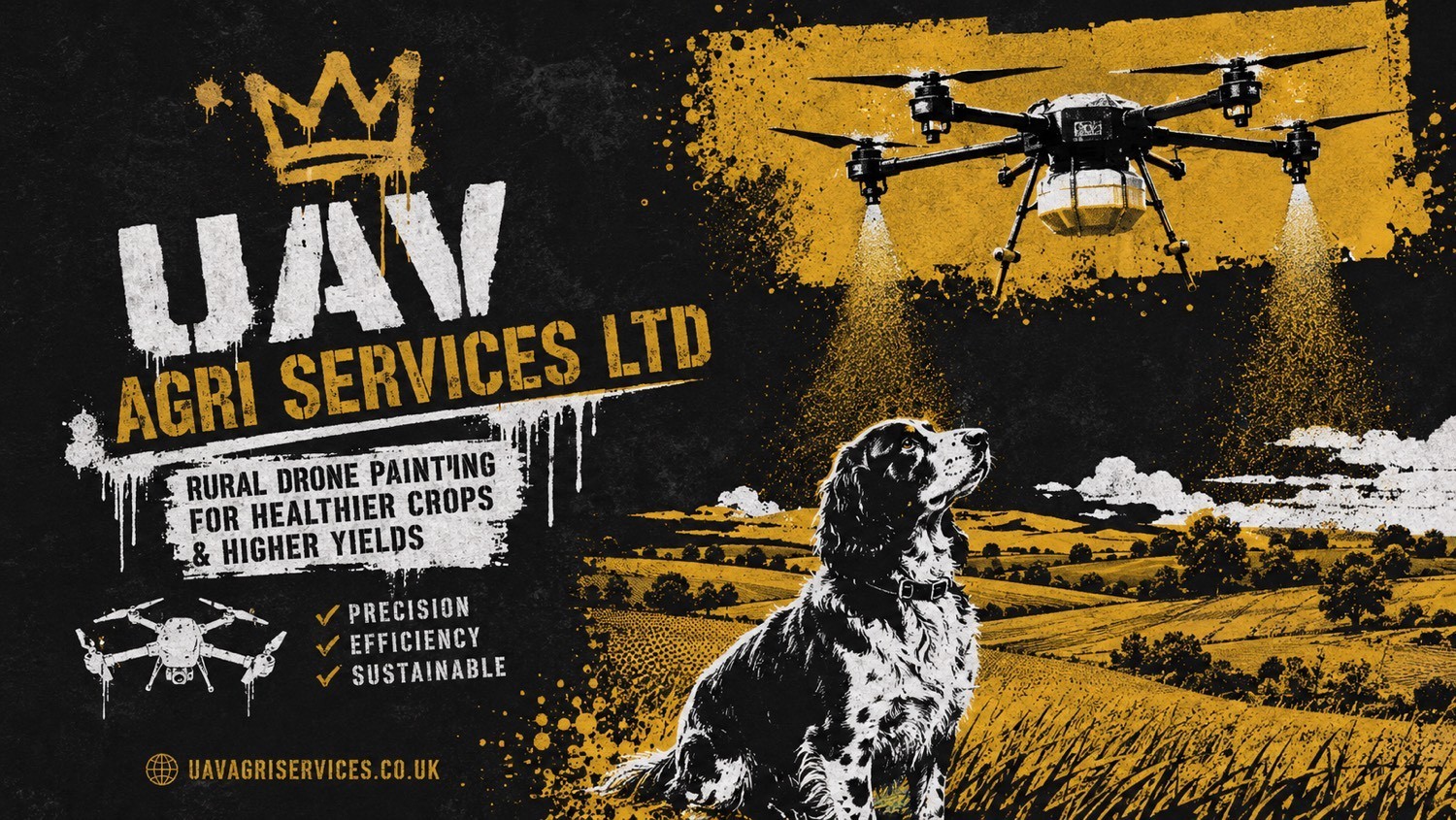
Field craft
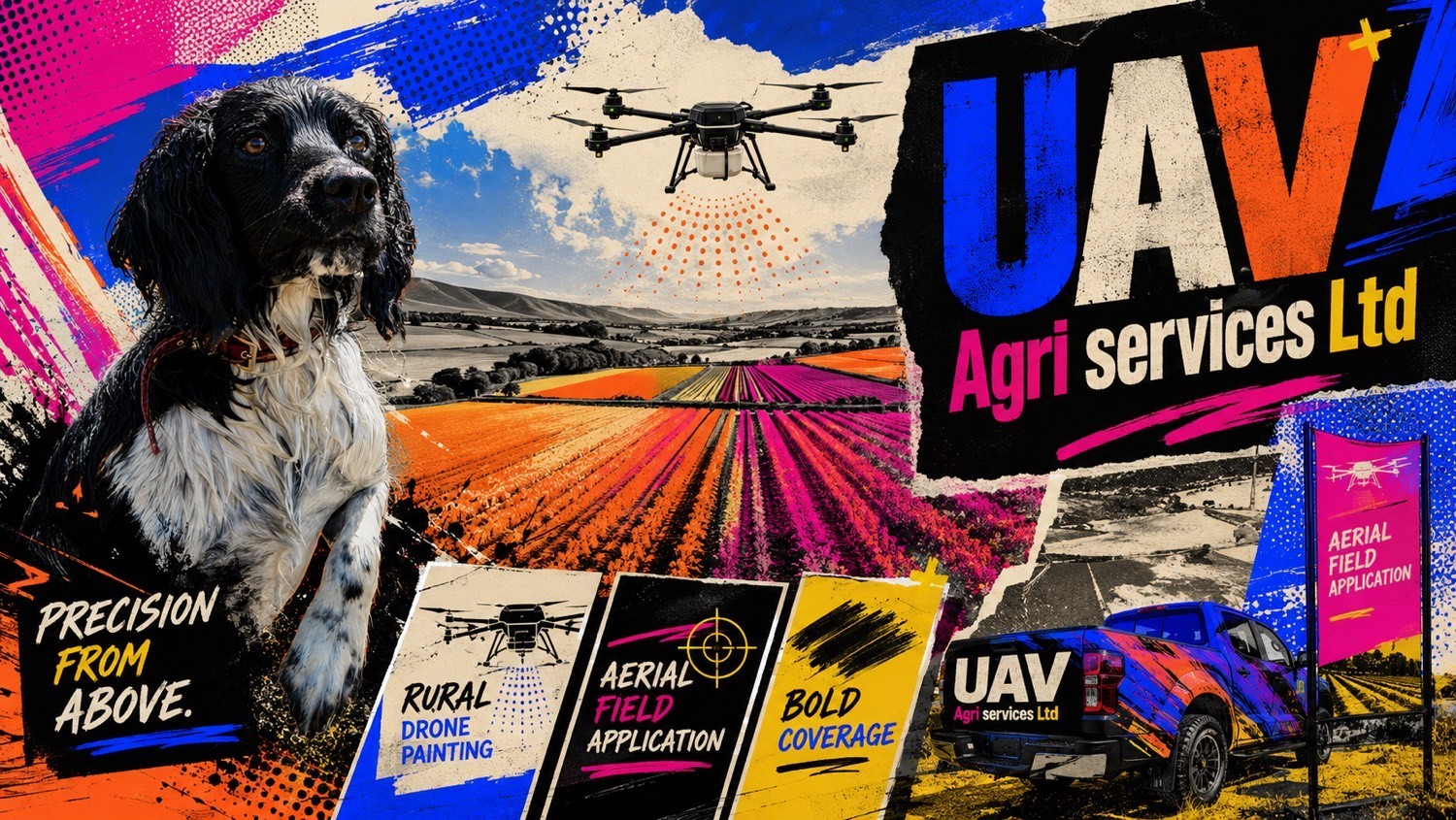
Full coverage
Studio system
Heritage kit
Night spray
Barn coating
Field craft
Full coverage
XIII/Questions
A dry crop, wind we can work in, and a legal window. We will not force a pass in rain or a gale — we watch the same forecast you do, and we move when the field is ready.
Fungicide, herbicide, foliar feed, and approved tank-mixes. If we cannot legally apply it, we will not load it. Tell us the product when you request the work and we will say plainly if it flies.
Yes. Commercially insured, a written risk assessment before every job, and a pilot who has walked the ground. You get the paperwork with the invoice.
If the ground is carrying and the boom can finish it cleanly, use the boom. We fly the rest: wet soils, tramline-shy crops, awkward headlands, and the buildings the scaffold quote made you wince at.
By crop, hectares, product and access — not a menu price. Request the work. Ewan prices it the same day. No software demo, no retainer.
Yes — days in the yard, not a login. Spray, coat, scout: the work we fly. We are not a CAA licence mill. Bring a ticket if you have one. Book a seat and Ewan will price the days.
We ask where they lie, how they move, and when we pause — before the rotors turn. Biosecurity and exclusion are part of walking the holding, not extras on the invoice.
XIV/The order
Rural drone painting — crop or barn. Ewan quotes the same day. No software demo. No retainer. No cart.